


Ever wondered if a high bounce rate is secretly killing your Google rankings? It’s a question that confuses many website owners and SEOs. The truth may surprise you: bounce rate alone does not directly affect Google rankings. Instead, what matters is why users leave and whether your content actually satisfies their intent.
A visitor leaving quickly isn’t always a red flag. If your page delivers exactly what they need like a quick answer, a calculation, or a lead capture they may leave happy, and Google sees that as a success. Optimizing for engagement, clarity, and relevance is far more effective than chasing arbitrary bounce rate percentages . Instead of focusing on vanity metrics, many businesses rely on professional SEO consulting to improve user satisfaction and long-term rankings
What Is Bounce Rate in Today’s SEO and Analytics?
Bounce rate measures the percentage of visitors who leave a page after viewing just one page, without interacting further. Historically, it was often treated as a measure of engagement but modern analytics, especially GA4, have changed the game.
- GA4 vs Universal Analytics: GA4 tracks engaged sessions rather than simple exits, making proper technical website optimization essential for accurate performance measurement. It factors in time spent, scroll depth, and interactions, making bounce rate less absolute than before.
- Key takeaway: A high bounce rate does not automatically mean your content fails. Sometimes it simply reflects page type, user intent, or content format.
Instead of obsessing over numbers, focus on making your content relevant, easy to read, and naturally engaging. Internal links, visuals, and clear navigation encourage visitors to explore more.
Is Bounce Rate a Google Ranking Factor?
Short answer: no.
Google has confirmed this multiple times. Experts like John Mueller have repeatedly stated that bounce rate does not influence rankings directly. What truly matters are user engagement signals:
- Dwell time (how long users stay)
- Click-through rates from search results
- Depth of site exploration
- Overall satisfaction with your content
A page can have a high bounce rate yet rank in the top spots if it delivers what users are searching for, think FAQs, single-page guides, or concise informational posts.
Lesson for site owners: optimize for relevance, readability, and user experience not a lower bounce rate. If engagement metrics appear weak, conducting a comprehensive SEO site audit can uncover content gaps, UX issues, or intent mismatches affecting performance.
Bounce Rate vs User Satisfaction: Why SEOs Often Get It Wrong
Bounce rate is often mistaken for dissatisfaction. But leaving a page quickly doesn’t always mean a negative experience.
- Bounce rate = single-page session
- User satisfaction = qualitative engagement, reflected in dwell time, conversions, or interactions with other content
For example, informational pages can see 70–80% bounce rates and still rank highly if visitors spend meaningful time on the page and don’t return to search results immediately. Conversely, pages with lower bounce but frequent “pogo-sticking” (returning to search results quickly) can lose visibility.
True performance comes from a data-driven digital marketing strategy that prioritizes user satisfaction over surface-level metrics.
Pogo-Sticking, Dwell Time, and Engagement Signals
Bounce rate alone is not Google’s main signal. Instead, Google looks at:
- Pogo-sticking: when users return to SERPs quickly
- Dwell time: how long visitors stay before leaving
- Engagement metrics: clicks, scrolls, and interaction
The takeaway: create content that immediately satisfies search intent, makes navigation intuitive, and encourages further exploration. When dwell time is high and pogo-sticking is low, bounce rate concerns naturally diminish while rankings improve.
| Metric | What It Measures | When It Matters | When It Doesn’t |
| Bounce Rate | Single-page sessions | Diagnosing UX or intent mismatch | Single-answer pages, FAQs |
| Dwell Time | Time before returning to SERPs | Measuring content satisfaction | Navigational queries |
| Engagement Rate (GA4) | Interaction + time | Evaluating real user value | Passive content consumption |
Businesses aiming to reduce pogo-sticking often invest in advanced search performance strategy to align content closely with search intent.
What Does a High Bounce Rate Really Mean?
Not all high bounce rates are bad. Context matters:
- Normal: blog posts, FAQs, calculators, single-page lead captures
- Problematic: landing pages, checkout pages, or multi-step content where high bounce signals a mismatch, slow load, or confusing UX
Always analyze supporting metrics dwell time, scroll depth, internal links to distinguish “healthy” from “problematic” bounce rates.
Benchmarks: Good vs Bad Bounce Rates
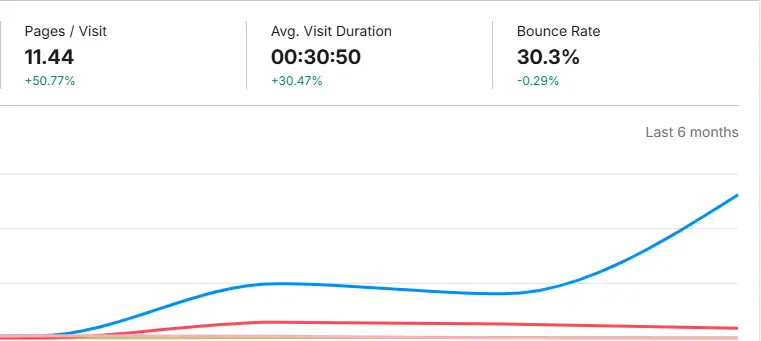
Bounce rates vary by page type and industry:
- Blogs & news sites: 50–70% is normal
- Ecommerce landing/product pages: 20–40% preferred
- Checkout pages: ideally under 30%
Use benchmarks as guidance, not strict rules. The ultimate goal is engaged, satisfied users, not hitting arbitrary percentages.
Ecommerce Bounce Rate: How It Impacts Revenue
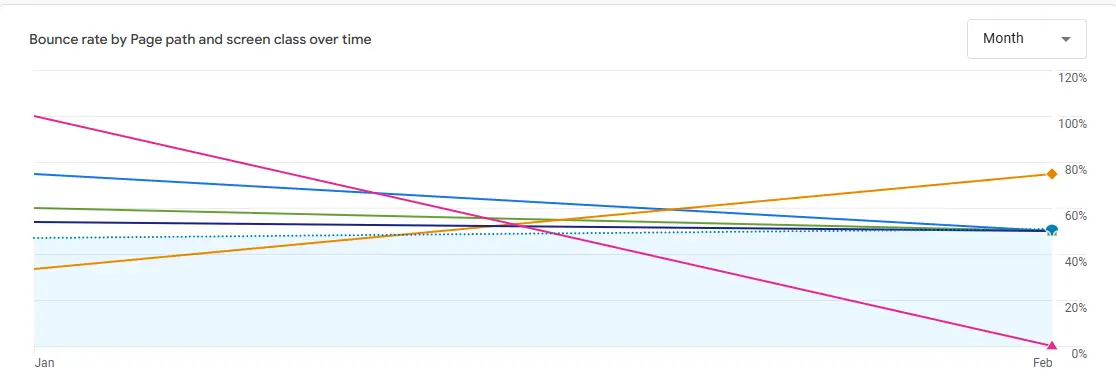
In ecommerce, context is critical:
- Product pages: 30–50% is acceptable
- Category pages: 40–60%
- Checkout pages: aim for the lowest bounce possible (<30%)
Strategies to reduce bounce and increase engagement:
- Fast-loading pages
- Clear product display and navigation
- Heatmaps & session recordings to identify friction
- A/B testing CTAs, layouts, and internal links
Reducing friction on product and category pages often requires a tailored online store SEO optimization strategy focused on conversions.
When High Bounce Rate Is Normal (And Healthy)
Some pages are meant for quick answers:
- FAQ pages
- Instructional guides
- Single-page lead captures
A high bounce here shows that users got what they needed. In fact, in AI-driven search environments, Google sees this as a success rather than failure.
Bounce Rate and Long-Term SEO
While bounce rate isn’t a direct ranking factor, consistently high bounce can indicate issues:
- Content mismatch
- Outdated information
- Poor UX
Over time, Google favors pages that satisfy users more effectively. Monitoring bounce alongside dwell time, CTR, and repeat visits provides actionable insights for sustainable SEO.
How to Improve Bounce Rate the Right Way
Focus on user success, not numbers:
- Content relevance: answer search queries precisely
- User experience: fast, mobile-friendly, easy navigation
- Internal linking: guide users to related resources
- Readability: short paragraphs, bullet points, visuals
Optimizing these factors naturally lowers bounce and improves engagement. Improving page speed and mobile usability through core web performance optimization can significantly enhance engagement.
Bounce Rate in GA4: What SEOs Misread
GA4 changed everything:
- Bounce is now the inverse of engagement rate
- A session counts as a bounce only if the user:
- Stays <10 seconds
- Doesn’t trigger an event
- Doesn’t view multiple pages
Comparing GA4 bounce to Universal Analytics is misleading. GA4 reflects interaction, not raw exits, aligning more closely with Google’s focus on satisfaction.
Google’s Official Position on Bounce Rate
- 2014: Google confirms bounce rate is not a ranking factor
- 2018: John Mueller reiterates bounce rate isn’t used for rankings
- 2022: GA4 shifts focus to engagement
- 2024–2025: AI-driven SERPs prioritize intent satisfaction over retentionThe takeaway: Google rewards outcomes, not vanity metrics.
Bounce Rate, AI Search, and the Future
As AI search evolves, user satisfaction matters more than time-on-page. A user who lands, gets an answer, and leaves is not a failure. Pages that fail to satisfy queries are quickly replaced by better alternatives in AI-powered results.
FAQs: Bounce Rate & Google Rankings
Does bounce rate affect Google rankings directly?
No. Google has repeatedly confirmed that bounce rate is not a direct ranking factor. A high bounce rate alone will not hurt rankings if the page satisfies search intent and delivers the information users are looking for.
Is a high bounce rate always bad for SEO?
No. A high bounce rate can be normal for single-page content, blog answers, or lead capture pages. If users get what they need and leave satisfied, a high bounce rate is not a negative SEO signal.
What does bounce rate actually tell you?
Bounce rate shows how often users leave after one interaction. By itself, it doesn’t measure satisfaction. It becomes useful only when analyzed alongside engagement time, scroll depth, and internal navigation behavior.
Does Google use GA4 bounce rate data for rankings?
No. Google does not use GA4 or Google Analytics bounce rate data in its ranking algorithm. Analytics tools help site owners understand users, but Google relies on its own engagement and relevance signals.
What’s the difference between bounce rate and engagement rate in GA4?
In GA4, bounce rate is the inverse of engagement rate. A session is a bounce only if users don’t stay 10 seconds, interact, or view another page. This shift focuses on interaction, not exits.
Can improving bounce rate improve rankings?
Indirectly, yes. Improving content relevance, UX, and internal linking can increase engagement. Better engagement often leads to stronger long-term rankings, not because bounce rate changes, but because user satisfaction improves.
Should I optimize for bounce rate as a KPI?
No. Bounce rate should not be a primary KPI. Use it as a diagnostic metric alongside engagement time, conversions, and intent satisfaction. Optimizing for bounce alone leads to misleading decisions.
Is bounce rate important for ecommerce websites?
Bounce rate matters in context. Product and category pages should encourage exploration, while checkout pages may naturally have lower bounce. Focus on usability, clarity, and trust signals not hitting a specific bounce number.
Does bounce rate matter more in AI-driven search results?
Not directly. In AI-driven SERPs, satisfaction matters more than retention. If your content resolves the query efficiently, users may leave and that’s a success, not a failure.
Conclusion
Bounce rate is a diagnostic signal, not a goal. Optimizing purely to reduce bounce is pointless. Instead, focus on:
- Content relevance
- User experience
- Engagement metrics (dwell time, scroll depth, internal navigation)
If visitors land, get value, and either convert or leave satisfied, your page is performing as it should. Google rewards meaningful outcomes not vanity metrics
