


Most SEO debates fade away.
Page speed refuses to die.
And in 2026, the question is no longer “Does speed matter?” but “How much does it really influence rankings?”
If you manage websites, you’ve seen the pattern. Traffic stalls. Rankings fluctuate. Everything looks “fine,” yet performance drags. Someone points at Core Web Vitals. Another blames content. A developer says speed is “good enough.” When performance issues quietly undermine visibility, a focused technical SEO review often uncovers the bottlenecks standard reports miss.
This guide cuts through the noise. No myths. No recycled advice. Just clear answers, practical insight, and ranking reality.
Does Page Speed Affect Rankings in 2026?
Yes. Page speed remains a ranking factor.
Google continues to evaluate performance through Page Experience signals, where Core Web Vitals (CWV) act as measurable UX indicators. However, Google consistently emphasizes that relevance and content quality outweigh speed alone.
But here’s the part many articles skip: its influence is conditional, not dominant. Speed rarely pushes a weak page to the top. Yet it absolutely holds back strong pages when user experience suffers. When rankings plateau despite strong content, a comprehensive SEO audit can clarify whether performance, intent alignment, or authority gaps are holding visibility back.
Think of speed as a performance filter. If two pages compete with similar relevance, authority, and intent match, Google often favors the faster, smoother experience.
How Google Actually Uses Page Speed as a Ranking Signal
Google doesn’t rank pages based on raw loading time alone. Speed feeds into Page Experience signals, which reflect how real users experience your site.
This distinction matters. A page can load “fast” yet still frustrate users through layout shifts, delayed interactivity, or heavy scripts. In 2026, Google evaluates perceived performance and interaction quality, not stopwatch speed. Performance analysis should always sit alongside on-page optimization, since UX signals and content relevance work together rather than independently.
Importantly, speed functions more often as a limiting factor than a boosting factor. Poor performance can suppress rankings, while excellent performance rarely guarantees promotion.
Page Experience vs Core Web Vitals
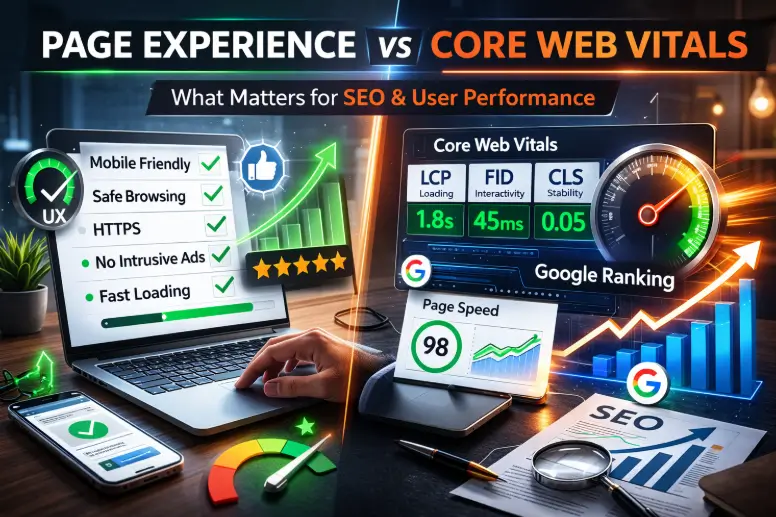
Page Experience is the broader framework. It includes HTTPS, mobile friendliness, safe browsing, and intrusive interstitials.
Core Web Vitals (CWV) focus specifically on measurable UX elements tied directly to loading behavior and responsiveness.
| Signal | Role |
| Page Experience | Overall UX & trust signals |
| Core Web Vitals | Quantified performance metrics |
Ignoring this difference leads to wrong decisions. Improving “speed” without improving CWV metrics often produces minimal ranking impact. For businesses competing in demanding verticals like contractors or agencies, home services SEO strategies often integrate UX, trust, and performance improvements simultaneously.
Ranking Factor vs Ranking System
Page speed is a ranking factor, not a ranking system.
It contributes signals but does not operate independently like content relevance or link authority. Speed influences outcomes relative to stronger systems rather than replacing them.
Many site owners misunderstand this. They expect speed fixes to deliver dramatic ranking jumps. Instead, speed usually acts as a tie-breaker or suppressor, not a primary driver.
This misunderstanding frequently appears during SEO consulting sessions, where expectations must be aligned with how ranking systems truly behave.
How Strong Is Page Speed Compared to Other Ranking Factors?
While performance matters, its ranking weight is generally moderate and situational compared to dominant systems.
| Factor | Relative Ranking Influence |
| Content relevance & intent match | Very High |
| Backlinks / authority | Very High |
| Page speed / Core Web Vitals | Moderate / Conditional |
This explains why fast pages with weak content rarely rank well, while authoritative pages with severe CWV issues often underperform.
Authority signals still dominate outcomes, which is why off-page strategies remain critical for competitive SERPs.
Core Web Vitals in 2026: What Still Matters
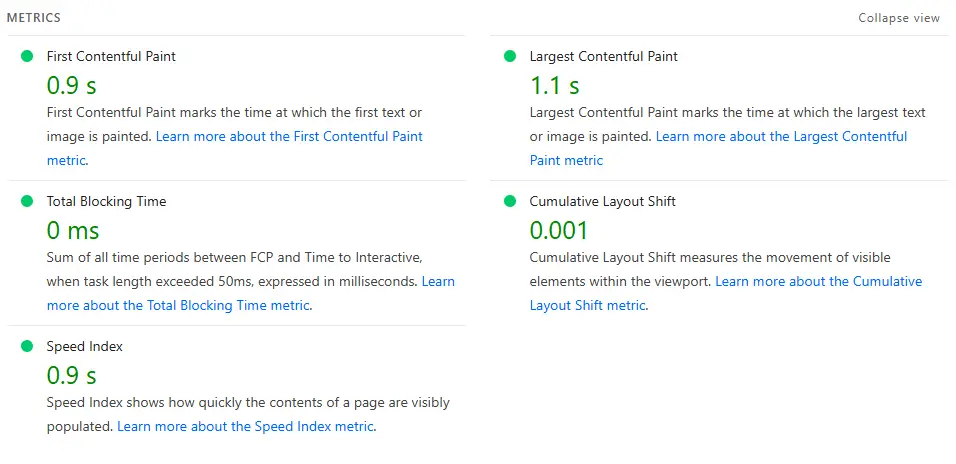
By 2026, Core Web Vitals remain central to performance evaluation. The metrics evolved, yet the philosophy stays consistent: deliver stable, responsive, fast-feeling pages. Diagnosing CWV failures typically requires deeper technical optimization, especially when scripts, rendering paths, or server delays interfere with UX.
Let’s break down what truly matters.
Largest Contentful Paint (LCP)
LCP measures how quickly the main content becomes visible.
Users don’t care when tiny elements load. They care when the page feels usable. A slow LCP creates immediate friction, especially on mobile networks. Pages exceeding ~4 seconds often show measurable increases in bounce probability.
A real example: An eCommerce homepage loading hero images slowly caused visible hesitation. Bounce rates increased before users even scrolled. Rankings gradually slipped despite strong backlinks.
Interaction to Next Paint (INP)
INP measures responsiveness after user interaction.
Clicks that lag. Buttons that freeze. Forms that delay feedback. These issues degrade perceived quality instantly. High INP commonly correlates with repeated clicks and abandonment behavior.
In one SaaS audit, pages passed LCP but failed INP. Heavy JavaScript blocked interactions. Engagement signals weakened steadily.
Cumulative Layout Shift (CLS)
CLS measures visual stability.
Unexpected shifts frustrate users more than slightly slower loading. Content jumps. Buttons move. Ads push layouts downward. Even acceptable speed scores can mask CLS problems affecting usability.
A blog client experienced this. Banners caused shifts. Users mis-clicked constantly. Time-on-page dropped. Rankings softened over time.
How Much Does Page Speed Impact Rankings? (The Brutal Truth)
Here’s the uncomfortable reality:
Speed rarely transforms rankings alone.
Speed often protects rankings.
SEO correlation studies consistently show weaker direct ranking relationships for speed compared to relevance and authority. However, extremely poor performance strongly correlates with ranking underperformance and engagement decline.
If your content lacks relevance, expertise, or authority, speed improvements won’t compensate. But if your page already performs well, poor CWV metrics can quietly limit its potential.
Gains are strongest when:
- Competition is tight
- Content quality is high
- CWV issues are severe
Speed acts more like risk reduction than growth acceleration. Engagement metrics like pogo-sticking and rapid exits often connect back to both UX friction and behavioral signals, similar to patterns discussed in bounce rate analysis.
When Page Speed Helps Rankings and When It Doesn’t
Speed’s impact is context-driven.
Competitive Niches
In crowded SERPs, small differences matter.
When pages deliver similar relevance and authority, performance quality becomes decisive. Improvements typically produce stabilization rather than explosive ranking jumps.
Low-Competition Keywords
Here, speed influence weakens.
If your page clearly outmatches others in relevance and authority, Google may tolerate slower performance. Yet user behavior may still deteriorate.
Already Fast Websites
Once performance crosses acceptable thresholds, diminishing returns appear.
Reducing load time from 2.2s to 1.4s rarely produces visible ranking changes.
SEO Prioritization Framework: Speed vs Content vs Backlinks
Every SEO team faces this decision.
The practical approach: prioritize constraints, not trends.
| Primary Issue | Priority Focus |
| Weak authority | Link acquisition |
| Weak relevance / intent mismatch | Content optimization |
| Poor UX / failing CWV | Speed & experience |
Speed optimization becomes urgent when:
- CWV metrics fail badly
- Bounce rates spike
- Mobile UX degrades
- Competitors outperform in UX
Ideal Page Speed Benchmarks for SEO in 2026
Benchmarks provide direction, not obsession.
Healthy CWV targets:
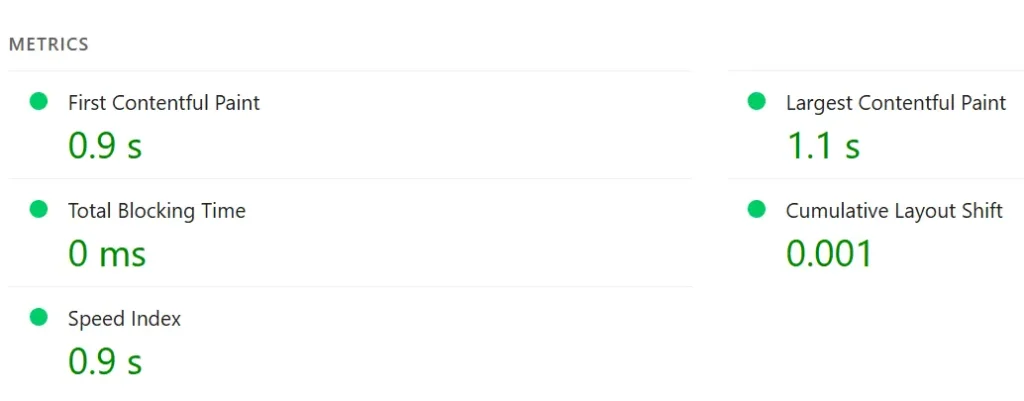
- LCP: under 2.5 seconds
- INP: under 200 milliseconds
- CLS: below 0.1
Crossing these thresholds typically removes performance limitations. Going far beyond them rarely multiplies ranking benefits.
How to Improve Page Speed (SEO-Focused Workflow)
(Random fixes → random outcomes line retained)
Minor refinement:
Look for pattern-level and template-wide issues, not isolated page scores.
Step 2 Refinement
Focus on elements most damaging to LCP, INP, or CLS.
(No structural change)
Step 5 Refinement
Speed optimization succeeds when user friction and interaction delays decrease, not when a tool displays a perfect score.
Does Faster Speed Improve Conversions?
Addition:
Conversion gains depend on friction reduction, not milliseconds alone.
Connecting the Dots: Speed, Rankings, and User Signals
Replace last causal chain line with precision:
Speed affects Core Web Vitals.
CWV influences Page Experience.
Page Experience shapes engagement patterns such as pogo-sticking, abandonment, and satisfaction signals.
SEO improvements compound indirectly rather than producing linear ranking jumps.
FAQs
Is page speed a ranking factor in 2026?
Yes. Page speed remains a ranking factor in 2026, primarily evaluated through Core Web Vitals and Page Experience signals. However, its influence is conditional. Speed alone rarely boosts weak pages but can suppress strong ones when performance issues degrade user experience.
How important is page speed for SEO?
Page speed plays a supporting — not dominant — role in SEO. Content relevance and authority carry more ranking weight, yet poor performance can limit visibility, engagement, and conversions. Speed optimization matters most when Core Web Vitals fail or user experience shows friction.
Does improving page speed increase rankings?
Sometimes. Speed improvements help when performance is a clear bottleneck, especially in competitive SERPs. If content quality or authority is weak, rankings may not change significantly. Speed more often stabilizes and protects rankings rather than delivering dramatic position jumps.
Can a slow website still rank well?
Yes, particularly for low-competition or highly authoritative queries. Google prioritizes relevance and intent satisfaction. However, slow performance often harms engagement metrics, conversion rates, and ranking resilience. Over time, severe speed issues can erode user signals and reduce competitive strength.
What Core Web Vitals matter most for SEO?
Largest Contentful Paint (LCP), Interaction to Next Paint (INP), and Cumulative Layout Shift (CLS). These metrics measure loading experience, responsiveness, and visual stability. Failing them may weaken Page Experience signals, while meeting recommended thresholds typically removes performance-related limitations.
Is page speed more important for mobile SEO?
Generally, yes. Mobile users face slower networks and higher sensitivity to delays. Google’s mobile-first indexing reinforces this reality. Poor mobile performance can increase bounce rates and frustration, making speed optimization more impactful for rankings and conversions on mobile devices.
What is a “good” page speed for SEO in 2026?
Rather than obsessing over tool scores, aim for healthy Core Web Vitals: LCP under 2.5 seconds, INP under 200 milliseconds, and CLS below 0.1. Meeting these thresholds typically ensures acceptable user experience and removes most performance-related ranking constraints.
Does a 100 PageSpeed score guarantee better rankings?
No. A perfect score does not guarantee ranking improvements. Google evaluates real-world user experience, relevance, and authority. Once Core Web Vitals reach acceptable levels, further score optimization often yields diminishing SEO returns while offering only marginal UX benefits.
Conclusion
Let’s end with clarity:
Page speed is a ranking factor in 2026
Its impact is situational, not dominant
CWV metrics matter more than raw load time
Speed protects strong SEO, rarely rescues weak SEO
User experience is the real battlefield
If your site is slow and unstable, you’re leaking trust, engagement, and ranking potential.
If your site is already fast, your next SEO gains likely live elsewhere.
Smart optimization is not about chasing trends.
It’s about removing the biggest constraints holding growth back.
If you’re uncertain whether speed, UX, or authority is limiting growth, you can request a strategy consultation.
