



A visitor lands on your website and the browser shows “Not Secure.”
Most people do not read the page after that warning. They close the tab.
Search engines notice this behavior. When users leave quickly, rankings often follow. That is why HTTPS moved from a technical option to a basic SEO requirement.
Many site owners still ask the same question.
Does HTTPS really affect search rankings or is it only about security?
The answer is simple but often misunderstood. HTTPS alone will not push a weak page to the top of Google. But without it, your website starts at a disadvantage. Trust signals drop. Browsers warn visitors. Analytics becomes messy. In competitive niches, those small factors decide who ranks and who disappears.
This guide explains the real impact of HTTPS on SEO. You will see how it affects rankings, when migration can hurt traffic, and how to switch safely without damaging your search performance.
Google’s Official Position on HTTPS
Google publicly confirmed HTTPS as a ranking signal in 2014 through its Search Central blog. The announcement explained that secure connections help protect user privacy and make the web safer.
Over the years Google strengthened this direction.
2018
Google Chrome started marking HTTP pages as “Not Secure.”
2021
Google introduced the Page Experience update, which reinforced safe browsing and secure connections as part of user experience signals.
Today more than 95 percent of pages loaded in Chrome use HTTPS, according to Google transparency reports. This shows how quickly secure browsing has become the standard across the web.
Does HTTPS Affect SEO Rankings
Google confirmed years ago that HTTPS is a ranking signal.
It is not a powerful ranking factor like content quality or backlinks. Still, it matters. HTTPS is still one of many ranking signals that search engines evaluate when comparing similar pages.
Think of HTTPS as a tie breaker. When two pages are similar in quality, the secure page often wins the higher position.
There is another layer many people ignore. HTTPS improves signals that influence rankings indirectly.
These include:
User trust
Click through rate
Time on page
Reduced bounce rate
A page that feels secure keeps visitors longer. Search engines also evaluate user behavior signals when measuring content quality.
.Google Search Central documentation also explains that secure browsing helps build a safer ecosystem for users, which is why Google encourages every website to adopt HTTPS.
Why Google Prefers HTTPS Websites
Search engines want to protect users. That is the main reason HTTPS became standard.
When a website uses HTTPS, the connection between the browser and server is encrypted using TLS (Transport Layer Security). This prevents attackers from stealing sensitive information such as login data or payment details.
Google has made its position clear for years.
Secure browsing should be the default across the web.
There are also practical reasons behind this preference.
Browsers like Chrome now label HTTP pages as unsafe. That warning damages credibility before a visitor even reads the content.
From an SEO perspective, this leads to a chain reaction:
Visitors hesitate to continue.
Engagement drops.
Behavior signals weaken.
Rankings slowly follow.
HTTP vs HTTPS: What Changes for SEO
Many beginners assume HTTPS only adds a padlock icon. In reality, several technical and behavioral factors change after switching.
The table below shows the main differences.
| Factor | HTTP Website | HTTPS Website |
|---|---|---|
| Security | Data sent in plain text | Data encrypted between browser and server |
| Browser Trust | Often marked “Not Secure” | Secure padlock shown |
| Ranking Signal | No advantage | Small ranking signal |
| Referral Data | Often lost in analytics | Referral data preserved |
| User Trust | Lower confidence | Higher credibility |
The difference might look small on paper. In real search results, trust and security influence user behavior, which directly affects SEO performance.
Real SEO Benefits of HTTPS
HTTPS is not only about protection. It also improves several signals that help websites grow in search results.
Small Ranking Advantage
Google treats HTTPS as a lightweight ranking signal.
It will not rescue weak content, but it helps secure pages compete more fairly.
Higher User Trust
Visitors feel safer interacting with secure websites.
This increases the chance they will explore more pages.
Better Click Through Rate
When users see the padlock symbol in the browser, they feel comfortable opening the page.
Higher click rates often lead to stronger visibility over time.
Accurate Referral Data
HTTP websites frequently lose referral information in analytics tools.
HTTPS preserves that data, which helps marketers measure traffic sources more accurately. A deeper technical analysis often reveals how secure connections influence search visibility.
HTTPS and Modern Web Performance
Secure websites can also benefit from modern web protocols.
Technologies such as HTTP/2 and HTTP/3 require HTTPS to function in most browsers. These protocols improve how resources are delivered across the network. Improving page speed signals remains an important part of modern search optimization.
Benefits include:
Faster page loading
Improved resource prioritization
Better mobile performance
Because page speed and performance influence user experience signals, HTTPS indirectly supports modern SEO performance metrics such as Core Web Vitals.
Does Switching to HTTPS Improve Rankings Immediately
Many people expect an instant ranking boost after installing an SSL certificate. That rarely happens.
In most cases, rankings remain stable after migration.
Sometimes traffic drops temporarily because search engines need time to reindex the secure version.
The real improvements appear gradually.
When visitors trust the site more, engagement improves.
Search engines then interpret those signals as positive user experience.
Over time, those improvements can strengthen rankings.
What Happens After an HTTPS Migration
Search engines need time to process the migration and consolidate signals.
| Time After Migration | What Typically Happens |
|---|---|
| First few days | Search engines crawl the HTTPS version |
| 1 to 3 weeks | Rankings may fluctuate |
| 1 to 2 months | Signals stabilize and indexing improves |
These fluctuations are normal during a sitewide protocol change.
When HTTPS Migration Can Hurt SEO
HTTPS migration is safe when done correctly.
If handled poorly, it can damage rankings.
The most common problem is redirect mistakes.
When HTTP pages do not properly redirect to HTTPS, search engines treat them as separate pages. This creates duplicate content and splits ranking signals.
Another common issue is mixed content.
This happens when secure pages still load images, scripts, or files through HTTP links. Browsers block those elements, which breaks the page experience.
Even large websites have lost traffic after migration because technical details were ignored. Running a complete technical audit before migration helps prevent ranking loss.
SEO Safe HTTP to HTTPS Migration Checklist
A proper migration protects rankings and ensures search engines recognize the secure version quickly.
Follow these steps carefully.
Install a Valid SSL Certificate
Choose a trusted certificate provider. The browser must recognize the certificate as secure.
Force HTTPS Redirects
Every HTTP page should redirect permanently to its HTTPS version using a 301 redirect.
Update Internal Links
All internal links must point to HTTPS pages.
Update Canonical Tags
Canonical tags should reference the HTTPS version of each page.
Update XML Sitemap
The sitemap should only include secure URLs.
Verify HTTPS in Google Search Console
Add the HTTPS property and submit the updated sitemap.
Fix Mixed Content Errors
Scan the website to ensure images, scripts, and styles load through HTTPS.
Common HTTPS SEO Mistakes
Many websites install SSL certificates but still make mistakes that limit SEO performance.
Here are issues seen frequently during audits.
HTTP pages remain indexed
Search engines still show insecure versions in results.
Redirect chains
Multiple redirects slow crawling and weaken link signals.
Internal links pointing to HTTP
Search engines continue crawling the wrong version.
Expired SSL certificates
Browsers show security warnings again.
Fixing these issues often restores lost rankings.
Common Myths About HTTPS and SEO
Several misconceptions still circulate in SEO discussions.
HTTPS alone boosts rankings dramatically
In reality it is only a lightweight ranking signal.
Installing SSL automatically improves page speed
Speed improvements usually come from modern protocols and server configuration.
HTTPS guarantees higher traffic
Traffic improvements depend on content quality, backlinks, and user engagement.
Understanding these myths helps set realistic expectations.
How to Audit HTTPS Implementation
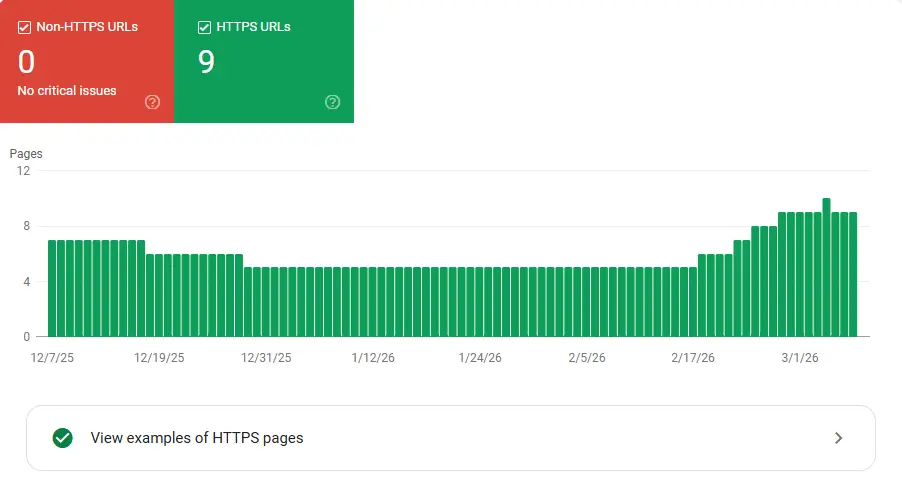
A technical audit ensures the migration worked correctly. Many businesses seek professional guidance when diagnosing complex SEO problems.
Start with Google Search Console.
Check whether indexed pages use HTTPS.
Google Search Console also includes an HTTPS report that highlights insecure resources on your site.
Next run a crawl using tools such as Screaming Frog.
Look for:
HTTP URLs
redirect chains
mixed content issues
Another simple method is a site search.
Type this into Google:
site:yourdomain.com http
If HTTP pages appear, the migration is incomplete.
Regular audits help maintain a clean and secure site structure.
HTTPS and Modern SEO Signals
Search engines evaluate many signals beyond keywords and backlinks. HTTPS interacts with several of them.
One example is Page Experience.
Secure connections contribute to safer browsing.
This aligns with Google’s goal of improving user experience across the web.
HTTPS also supports modern web technologies such as faster protocols and advanced security features.
For mobile users, security matters even more. Strong mobile optimization is another key factor influencing modern search rankings. Many visitors access websites on public networks where encrypted connections prevent data theft.
Example: Traffic Change After HTTPS Migration
A small ecommerce website migrated from HTTP to HTTPS after noticing declining trust signals.
Before migration, visitors often left the site after seeing the browser warning.
The team followed a proper redirect strategy and fixed mixed content issues.
Within two months:
Traffic stabilized
Bounce rate decreased
Average session duration improved
Rankings did not jump overnight, but engagement signals improved steadily, which strengthened search visibility. Several search signals contribute to long term visibility in Google results.
This example shows the real value of HTTPS. It supports better user experience, which search engines reward over time.
Is HTTPS Still Important for SEO Today
HTTPS is no longer optional. It is the foundation of a trustworthy website.
Search engines expect secure connections. Browsers warn users about insecure pages. Visitors hesitate to interact with sites that look unsafe.
While HTTPS alone will not push a website to the top of search results, operating without it creates an unnecessary disadvantage.
For businesses that rely on organic traffic, security, trust, and user experience work together. HTTPS strengthens all three.
Frequently Asked Questions
How does HTTPS affect SEO
HTTPS is a small Google ranking factor that helps secure websites compete fairly in search results. It improves user trust, protects data, and preserves referral information. These signals increase engagement, which can support stronger rankings over time.
Is HTTPS necessary for good SEO
HTTPS is not the only factor in SEO, but it is now a standard requirement. Secure websites build more trust with users and browsers. Without HTTPS, visitors may see security warnings that reduce clicks and engagement.
Does switching to HTTPS increase website traffic
HTTPS alone does not increase traffic immediately. However, it improves trust, removes browser warnings, and supports better user behavior signals. Over time, these improvements can help websites perform more strongly in search results.
Can a website rank well without HTTPS
A website can still appear in search results without HTTPS, but it will struggle to compete against secure sites. Browsers warn users about insecure pages, which lowers trust and can reduce clicks and engagement.
Final Thoughts
Security and SEO now move together.
A secure website builds trust, improves engagement, and supports long term search visibility.
HTTPS may look like a small technical change, yet it influences how visitors interact with your website and how search engines evaluate it.
When implemented correctly, it removes barriers between your content and your audience. That alone makes it worth the effort.
