Most SEO advice still talks about 200 ranking factors. That model is outdated.
If you follow it, you will spread effort across things that barely move rankings. In 2026, Google rewards intent match, real experience, and measurable usefulness, not checklists.
If your pages are stuck on page 2 or drop after updates, this is usually why.
This guide breaks down what actually drives rankings now, what stopped working, and how to fix it using a system that reflects how Google evaluates pages today.
Why Most SEO Advice Fails in 2026
Most content lists dozens of factors without context. That creates noise, not results.
Google doesn’t treat ranking signals equally anymore. It prioritizes user satisfaction first, then uses other signals to validate it.
Here’s the reality:
If your page doesn’t match intent, backlinks won’t save it. Many sites also overlook technical performance, especially page speed importance.
If your content lacks real experience, it won’t hold rankings.
Most sites fail not because they lack SEO, but because they focus on the wrong signals.
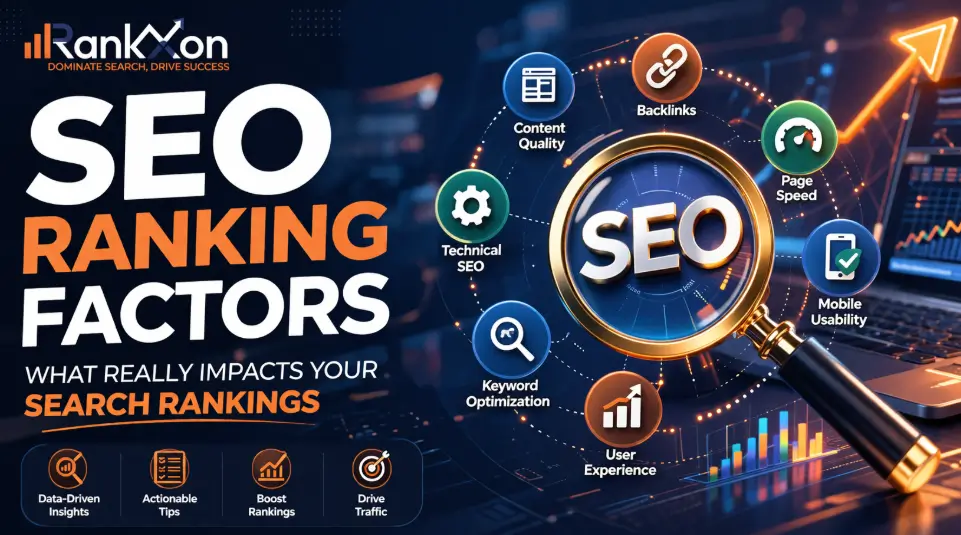
The 5 Ranking Factors That Actually Matter in 2026
Not everything matters equally. These are the factors that consistently move rankings when executed properly.
Ranking Factors Priority Table
| Priority | Factor | Impact | Difficulty | Speed | What To Do |
|---|---|---|---|---|---|
| 1 | Search Intent Match | Very High | Medium | Fast | Match format and expectation |
| 2 | Experience-Based Content | Very High | Medium | Medium | Add proof, examples |
| 3 | Content Depth | High | Medium | Medium | Cover full topic |
| 4 | Internal Linking | High | Low | Fast | Connect related pages |
| 5 | Authority Signals | High | High | Slow | Earn relevant backlinks |
Most competitors list factors. Very few show priority + execution order. If you want a full technical breakdown, start with a proper SEO audit service.
1. Search Intent Match (Still the #1 Factor)
Before writing, you need to understand what the user actually wants.
- Are they looking for a guide, list, or quick answer?
- What format dominates the top results?
If your format doesn’t match intent, you won’t rank, even with strong backlinks. Site structure and crawl clarity also play a role, which is covered in technical SEO basics.
This is where most SEO fails.
2. Experience-Based Content (Real E-E-A-T)
Google is no longer ranking “well-written” content. It ranks experienced content.
That means:
- Real examples
- Specific outcomes
- First-hand insights
Generic advice gets filtered out, especially after recent updates.
Real SEO Case Study: What Actually Moved Rankings
Here’s a real example from a dental website project:
What changed and why it worked
| Ranking Factor | Action Taken | Result |
|---|---|---|
| Search Intent | Aligned service pages with real queries like “dentist near me” | Traffic started growing consistently |
| Content Structure | Improved clarity and service-specific pages | Rankings stabilized |
| Internal Linking | Connected blog + service pages | Faster indexing and better visibility |
| Technical SEO | Cleaned indexation + improved speed | Better crawl efficiency |
| Backlinks | Built niche-relevant links | Authority increased |
Outcome
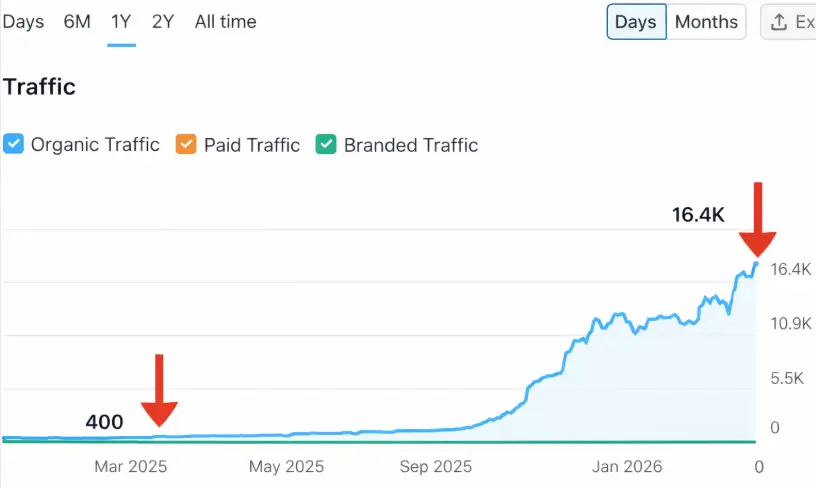
- Traffic grew 400 to 16K+ monthly
- Rankings stabilized across core keywords
- Visibility started compounding
Key insight:
No single factor caused growth. It was alignment across intent, structure, and authority.
AI Visibility Impact (Important for 2026)
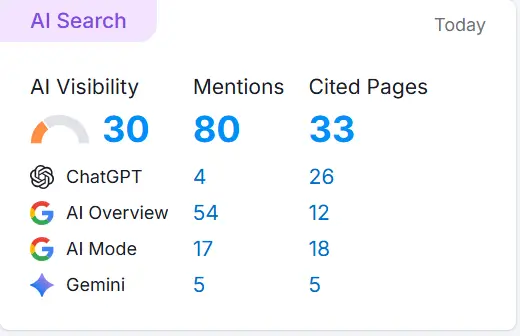
After improvements, the site also gained visibility in AI-driven search:
- AI Visibility Score: 30
- Total Mentions: 80
- Cited Pages: 33
Breakdown:
- ChatGPT: 4 mentions, 26 citations
- Google AI Overview: 54 mentions
- AI Mode: 17 mentions
- Gemini: 5 mentions
What this means in simple terms:
Google and AI tools are now picking and citing the content, not just ranking it.
This happened because:
- Content was clear and structured
- Answers were direct
- Topics were well connected
Tools like Google Lighthouse tool help measure real performance and structure.
Key Insight
Growth didn’t come from one trick.
It came from aligning:
- Intent
- Structure
- Authority
3. Content Depth and Topic Coverage
Thin content fails because it leaves gaps.
Google prefers pages that:
- Answer related questions
- Cover subtopics
- Fully satisfy the search
If users return to search results, your page loses. Security and trust also influence user behavior, especially with HTTPS ranking impact.
Your goal is simple:
End the search, not extend it
4. Internal Linking and Topical Authority
This is one of the most underestimated ranking drivers.
Strong internal linking:
- Helps Google understand context
- Distributes authority
- Improves ranking speed
Most competitors ignore this. That’s an opportunity. A structured internal strategy often works alongside targeted link building strategies.
5. Backlinks and Brand Authority
Backlinks still matter, but the model changed.
- Relevance > quantity
- Mentions and brand signals matter more
- Low-quality links are ignored
Strong opinion:
In many cases, better content + structure beats weak backlink profiles. If you need expert guidance, consider a focused SEO consulting service.
What Stopped Working in 2026
This is where most guides stay silent.
These tactics are losing impact:
- Keyword stuffing and density tricks
- Mass low-quality backlinks
- Thin AI-generated content
- Over-optimized anchor text
If you’re still relying on these, you’re holding your site back.
What Changed After Google Core Updates in 2026
According to Recent SEO updates reinforced one thing:
Google is better at detecting:
- Rewritten content
- Low-value pages
- Weak expertise
Sites that lacked depth or originality dropped.
Sites that showed real experience and clarity gained.
Recovery insight:
Fixing intent + improving content depth often leads to faster recovery than building links.
AI and SEO in 2026 (This Is Where Rankings Are Shifting)
Most articles mention AI. Few explain how to use it for rankings.
Here’s what actually matters:
How to appear in AI Overviews
- Answer questions directly and clearly
- Use short, structured sections
- Avoid fluff
- Define concepts simply
Content structure that works
- Clear headings
- Direct answers under each section
- Entity clarity (tools, brands, topics)
What fails
- Long vague paragraphs
- Generic summaries
- Rewritten content
Google is not just ranking pages anymore.
It is extracting answers.
If your content is not extractable, you lose visibility.
Why Your Competitor Is Ranking Above You
It’s not always about better writing.
They may have:
- Stronger internal linking
- Better topical coverage
- Higher trust signals
Ranking is a system, not a single factor.
How to Rank #1 on Google in 2026 (Execution System)
Ranking follows a predictable process.
Step 1: Understand intent
Analyze what type of content ranks
Step 2: Break down competitors
Study structure, not just words
Step 3: Create better content
Add clarity, proof, and depth
Step 4: Fix internal linking
Connect related pages strategically
Step 5: Build authority
Earn relevant mentions and links
Most people skip steps. That’s why they don’t rank. This step becomes easier when combined with consistent off page optimization.
Technical SEO That Still Matters
You don’t need complexity. You need performance.
Focus on:
- Fast loading
- Mobile usability
- Smooth interaction
Metrics like INP (Interaction to Next Paint) now reflect real user experience. You can dive deeper into mobile ranking factors for better performance.
If your page feels slow, users leave. Rankings follow.
SEO Mistakes That Kill Rankings
These are still common:
- Writing for keywords instead of users
- Publishing generic content
- Ignoring internal linking
- Chasing backlinks without relevance
Fixing these alone can improve rankings faster than new content.
Quick SEO Audit Checklist (Fix This First)
Before publishing anything new:
- Does this match search intent?
- Is the topic fully covered?
- Are internal links in place?
- Is this genuinely useful?
Optimizing existing pages often brings faster gains than creating new ones.
Frequently Asked Questions
What are the most important SEO ranking factors in 2026?
Search intent match, experience-based content, and authority signals matter most. If your content satisfies users and shows real expertise, you can rank even without a strong backlink profile.
Can I rank without backlinks in 2026?
Yes, but only for low to medium competition keywords. Strong content, proper internal linking, and clear intent match can rank pages. However, backlinks are still needed to compete in highly competitive niches.
How do I know if my content matches search intent?
Check the top 5 results. If they are lists, guides, or tools, follow the same format. If your content type does not match what Google is already ranking, it will struggle to perform.
Why is my website stuck on page 2 or 3?
Usually due to weak intent match, lack of depth, or poor internal linking. In many cases, small improvements like better structure and clearer answers can push rankings to page 1.
Is AI-generated content safe for SEO in 2026?
Only if it is improved with real insights and experience. Pure AI-written content without added value often fails to rank or drops after updates. Google rewards originality and usefulness, not automation.
How long does it take to see SEO results?
For optimized pages, improvements can appear within a few weeks. New content may take 2 to 3 months depending on competition. Fixing existing pages usually delivers faster results than starting from scratch.
What is the fastest way to improve rankings right now?
Update pages already ranking between positions 4 and 15. Improve content depth, add internal links, and clarify answers. These pages have the highest chance to move quickly with minimal effort.
Conclusion: What You Should Focus On
If you want rankings, stop chasing long lists.
Focus on:
- Search intent
- Real experience in content
- Strong internal structure
Everything else supports these.
Most SEO content tries to cover everything.
Winning content focuses on what actually moves rankings.
